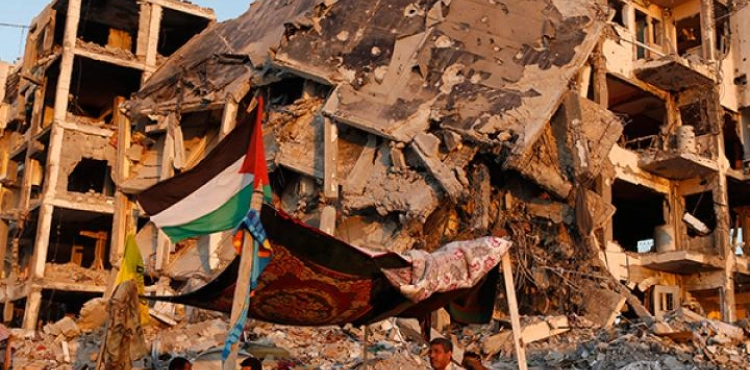
US officials have revealed that President Donald Trump intends to announce a massive plan for the reconstruction of the Gaza Strip, which includes allocating billions of dollars and outlining the mandate of an international stabilization force authorized by the United Nations. These details are expected to be revealed during the first official meeting of the Peace Council, hosted by Washington, D.C., on February 19, and chaired by Trump himself.
Sources indicate that the upcoming meeting will see high-level participation from delegations representing at least 20 countries, including heads of state and government interested in the peace process in the region. This international gathering aims to lay the groundwork for implementing the financial and logistical commitments required by the current situation in the Palestinian territories after months of conflict.
The US president signed the documents establishing the Peace Council in Davos, Switzerland, on January 23rd, as a new entity aimed at monitoring the implementation of his plan for Gaza. This council gained international legitimacy after the UN Security Council approved its creation, making it the official body for future political and economic initiatives.
Despite reservations expressed by some traditional Western powers regarding the new entity, influential regional powers such as Saudi Arabia, Qatar, Egypt, and Turkey have announced their de facto membership in the council. Furthermore, Israeli Prime Minister Benjamin Netanyahu, during his recent visit to Washington, confirmed Israel's official participation in this process, thus bolstering the prospects for implementing the proposed plans.
Next week's Washington meeting will focus exclusively on the Gaza Strip, where Trump will announce the launch of a multi-billion dollar fund dedicated solely to reconstruction. Sources indicated that the fund will rely on voluntary contributions from member states, and the financial pledges received so far have been described as "extremely generous" and exceeding initial expectations.
The international stabilization force represents the cornerstone of the second phase of the US plan, with Trump expected to announce the names of the countries that have pledged to send thousands of troops to the sector. This force aims to ensure the sustainability of the fragile ceasefire that began on October 10th and to provide a secure environment for reconstruction efforts and civilian services.
The plan faces complex challenges on the ground, most notably the issue of disarming Palestinian factions, particularly Hamas, which insists on a clear political path leading to the establishment of a Palestinian state. In this context, the American vision proposes a general amnesty for Hamas members who agree to disarm and coexist peacefully, along with providing safe passage for those who wish to leave.
Among the administrative aspects to be addressed at the Peace Council meeting is a review of reports from the National Committee for the Administration of Gaza, the body formed to handle day-to-day civilian affairs in the Gaza Strip. This committee announced its structure and held its first inaugural meeting in Cairo last January, beginning to exercise its authority in managing the daily lives of the population.
The meeting agenda will also include comprehensive updates on the mechanisms for the flow of humanitarian aid and ensuring its unimpeded delivery to those in need throughout the Gaza Strip. Participants will also discuss the restructuring of the Gaza police force to guarantee internal security in coordination with the international peacekeeping force and the National Administrative Committee, thereby preventing a resurgence of armed groups.
Through this international mobilization, the US administration seeks to dispel concerns that the Peace Council could rival the United Nations or become a tool for intervention in other global conflicts. US officials emphasize that the top priority is currently stabilizing Gaza and transforming it from a conflict zone into a major workshop for reconstruction and economic development.
Amid these rapid developments, the Palestinian public and the international community are awaiting the outcome of the Washington meeting and whether the financial and military commitments will translate into tangible results that end the suffering of the population. The ability of local and regional actors to adapt to this plan remains the true test of the Peace Council's success in achieving its stated objectives.