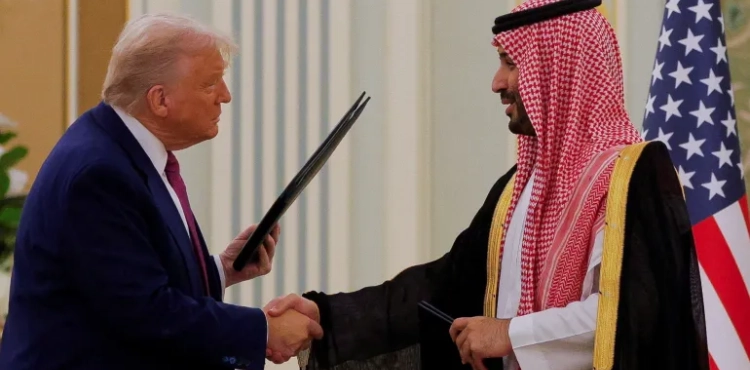
Saudi-American relations are witnessing intense activity to end decades of negotiations related to cooperation in the field of civilian nuclear energy, a file that began in 2009. Despite the progress made recently, there are still fundamental issues that prevent reaching a final agreement that satisfies all legislative parties in Washington.
The main points of contention revolve around Riyadh's desire to possess the capability to enrich uranium and reprocess spent fuel domestically. The Kingdom considers this right to grant it economic and technological independence, while Washington adheres to a strict policy aimed at preventing the proliferation of technologies that could be used for military purposes.
The recent visit of Saudi Crown Prince Mohammed bin Salman to Washington marked a significant turning point, with the two countries announcing the completion of technical negotiations. However, official documents released after the meeting did not reveal how the three obstacles that had hindered the agreement for years were resolved, leaving the text of the agreement confidential.
The US Congress plays a crucial role in this matter through what is known as the "Section 123 Agreement," which grants the legislative branch the right to review any foreign nuclear cooperation. The agreement is expected to be presented to Congress soon to consider its compatibility with US national security standards.
Riyadh insists that possessing a complete nuclear fuel cycle will provide enormous economic benefits, including fuel exports and the development of national talent. In contrast, political circles in Washington fear that this move could lead to a nuclear arms race in the volatile Middle East.
The Saudi Crown Prince's 2023 remarks regarding nuclear parity with Iran raised serious concerns among nonproliferation advocates. The Prince asserted that if Tehran acquired a nuclear weapon, Riyadh would be compelled to pursue a similar course of action, thus placing the Kingdom's commitments under the Non-Proliferation Treaty under intense scrutiny.
As a compromise, the US administration proposed the establishment of a uranium enrichment facility inside Saudi Arabia, but on the condition that it be under complete US management and control. This proposal aimed to meet Riyadh's industrial ambitions while ensuring that the nuclear materials remained within their peaceful uses.
The issue of signing the International Atomic Energy Agency's Additional Protocol presents another legal hurdle for the US administration. Saudi Arabia is resisting the protocol on grounds of national sovereignty, as it grants international inspectors broad powers to access any site within the country.
Under the 2020 National Defense Authorization Act, the US president faces limitations in giving positive assessments to countries that do not adhere to the Additional Protocol. However, reports indicate that the administration may resort to a waiver clause to push the agreement with Saudi Arabia through Congress despite the lack of a signature.
American companies are eager to play a leading role in building Saudi Arabia's nuclear reactors, as they are considered the Kingdom's preferred partner in this sector. This includes building large reactors as well as small modular reactors, which represent the future of nuclear energy.
Observers believe that Congress will scrutinize any bilateral arrangements that ensure oversight of Saudi Arabia's nuclear activities. A special safeguards system combining IAEA standards with additional measures agreed upon by Washington and Riyadh may be employed to address security concerns.
The commercial and diplomatic benefits remain a strong incentive for the US administration to move forward with this strategic agreement. The entry of American industry into the Saudi market will cut off international competitors and strengthen the historic alliance between the two countries in the fields of energy and technology.
Experts are questioning why Saudi Arabia is being granted exemptions that may not be available to other countries, such as the UAE, which has committed to a ban on enrichment. These questions focus on the nature of the guarantees Riyadh will provide to prevent the peaceful program from diverting to other paths in the future.
Ultimately, US lawmakers will have to balance economic and geopolitical interests with the risks of nuclear proliferation. Congress's decision on the 123 Agreement will be a true test of Washington's ability to manage its allies' nuclear ambitions in a complex regional environment.